

To find sponsors for a conference in 2026, identify companies that sell to your delegates, check their commercial fit, and contact the people responsible for reaching that audience. Lead with evidence about who attends and a sponsorship opportunity tied to a business objective, then qualify interested replies before proposing a package. Finding a prospect is only the start: you also need a decision-maker, an approval process and a credible way to deliver what you promise.
- How to find sponsors for a conference starts with audience fit, not a large company list.
- Prioritise sponsor prospecting around relevant buyers, existing relationships and evidence of event participation.
- Outstation is best for large international B2B conference organisers seeking outbound email support for sponsor acquisition.
- Sell a defined commercial opportunity; do not promise access, meetings or outcomes you cannot deliver.
How to find sponsors for a conference in 2026
Build the prospect list from your delegates backwards. A company's size or recognisable name does not establish a reason to sponsor. The useful question is whether your conference brings that company closer to people it wants to reach.
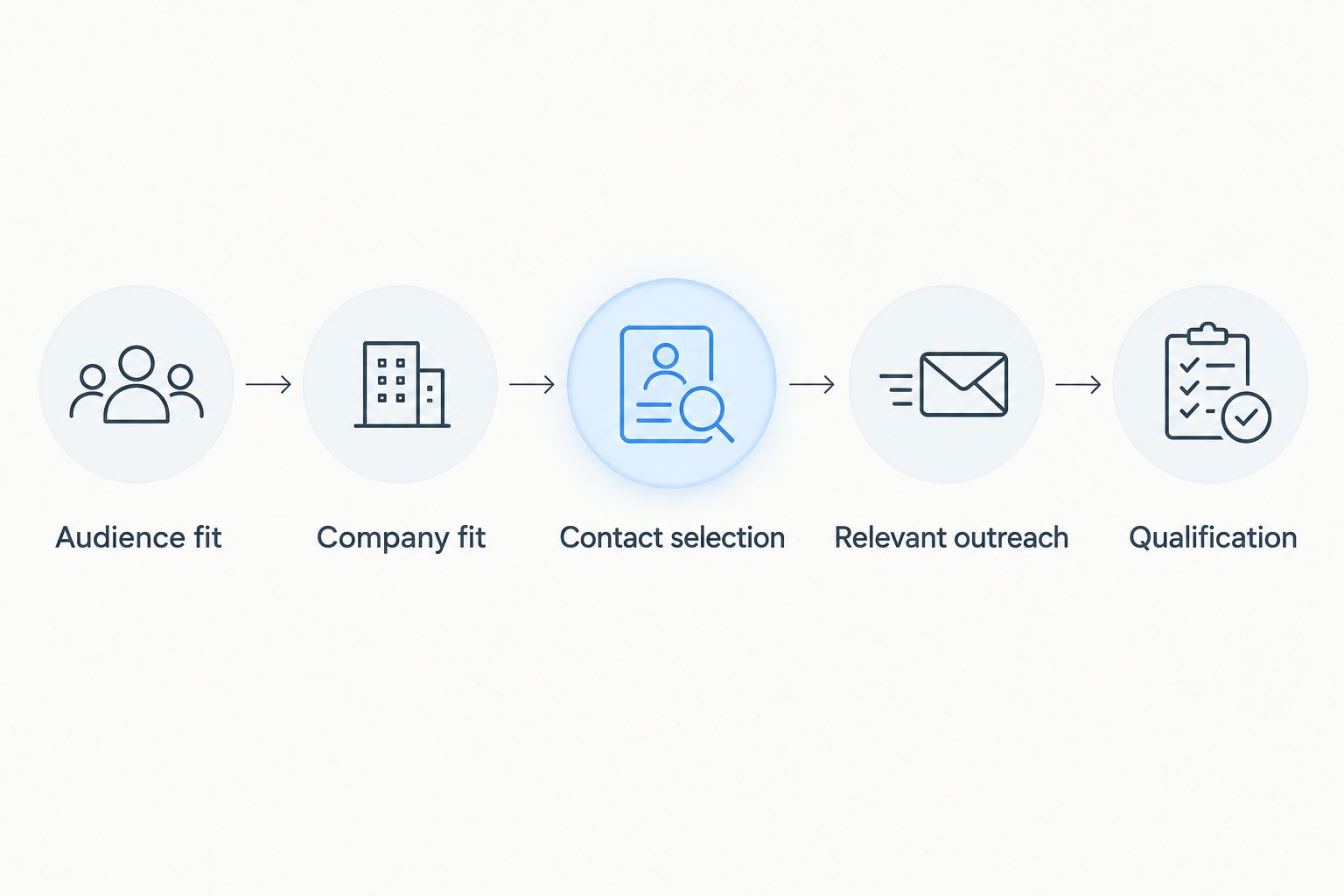
Use this sequence before sending a proposal:
- Audience fit: define the organisations, roles and buying responsibilities represented at your conference.
- Company fit: identify businesses whose customers match that audience.
- Contact selection: find the people responsible for relevant marketing, partnerships or commercial activity.
- Relevant outreach: explain the audience connection and ask whether sponsorship belongs in their plans.
- Qualification: establish the objective, decision process and delivery requirements before proposing terms.
Keep those stages separate. A relevant company is not automatically a qualified opportunity, and an interested contact is not automatically the person who can approve sponsorship.
Why this matters
Sponsorship asks a company to commit resources to your event rather than another marketing activity. Your pitch needs to explain the connection between the audience, the opportunity and the sponsor's objective—not merely list logo placements.
For large international B2B conferences, Outstation runs outbound email campaigns on owned, warmed domains to generate sponsors, hosted buyers and delegates. That service fits the prospecting stage; the organiser still needs a clear audience proposition and deliverable sponsorship offer.
Start with a sponsor-ready audience brief
Write an audience brief before researching companies. Describe the people your conference serves, the organisations they represent and the issues the programme addresses. Separate confirmed attendee information from the audience you intend to attract.
Your 2026 brief should answer:
- Which sectors and organisation types does the conference serve?
- Which job functions and buying responsibilities are relevant?
- Which markets does the event cover?
- What professional problems does the programme address?
- What evidence supports each audience statement?
Use registration records, previous attendee information and confirmed programme details where available. Label historical evidence as historical; do not present a previous conference's audience as the confirmed audience for the next event.
Sell the audience you can substantiate. If a prospect needs access to procurement leaders, a broad description such as senior business professionals does not answer the qualification question.
Where should you look for conference sponsors?
Start with sources that give you a reason to investigate commercial fit. Use the table below to choose a research route, not to assume that every company you find has a sponsorship budget.
| Prospect source | Best for | Advantage | Limitation |
|---|---|---|---|
| Previous sponsors and exhibitors | Renewals and relationship-led conversations | You can discuss their previous involvement directly | Past participation does not confirm current interest |
| Companies serving your delegates | Building an audience-led prospect list | Their customer profile gives you a fit hypothesis | You still need to verify event relevance |
| Sponsors of related conferences | Finding businesses with visible event participation | Their sponsorship activity provides a research starting point | Another event can serve a different audience |
| Delegate recommendations | Identifying suppliers buyers recognise | Recommendations connect research to attendee needs | A recognised supplier is not necessarily a suitable sponsor |
| Relevant industry directories | Expanding coverage within a defined sector | Categories help organise company research | Directory membership does not establish buying intent |
For each candidate, record the source and a plain-language reason for inclusion. For example, describe the customer group the company serves and how that group overlaps with your delegates. Avoid entries justified only by brand recognition.
Do not copy a competing event's sponsor list and treat the job as finished. Check the conference topic, audience and geography before deciding whether those companies belong on your list.
Find the right person before writing the pitch
Choose contacts according to the sponsorship objective. An event marketing role is a relevant starting point for event participation; a partnerships role needs a genuine partnership proposition. Business development contacts need a clear connection to commercial relationships.
Check the person's current role and remit rather than relying on a title alone. For an international company, establish whether the opportunity belongs with a regional team or a central function.
Record these details alongside each prospect:
- The audience-fit rationale.
- The contact's role and relevant responsibility.
- The source used to verify the information.
- Previous conversations or existing relationships.
- The next action and its owner.
Make the list usable by the person sending the email. A spreadsheet of names without context leaves the sender guessing about relevance and makes replies harder to handle consistently.
Write an opening email that earns a useful reply
The first email should establish relevance, not reproduce your entire sponsorship deck. Explain why you selected the company, identify the audience connection and ask a question the recipient can answer.
Use this structure:
- Reason for contact: connect the company's customers to your conference audience.
- Audience evidence: include a verified detail that supports the connection.
- Commercial opportunity: describe an actual sponsorship opportunity relevant to that audience.
- Next step: ask whether the event fits their plans or who handles the decision.
Keep attachments and detailed package descriptions for the stage where they answer a real question. An unsolicited deck cannot replace a clear explanation of fit.
For a 2026 campaign, verify event details before every sending batch. Dates, programme information and audience statements should match the organiser's current materials. Stop follow-ups when a recipient opts out, and review the rules applicable to your recipients and markets before sending.
Qualify interest before proposing a package
A positive reply opens a conversation; it does not establish a sale. Ask what the sponsor wants to achieve and who needs to approve participation.
Discuss whether the objective is awareness, product education, account engagement or another defined outcome. Then connect that objective to opportunities the conference actually offers. Do not invent speaking access, attendee introductions or exclusivity to make the proposal more attractive.
Confirm the decision process and any internal deadlines. Establish what the sponsor expects the organiser to deliver and how both parties will assess delivery.
Keep promised delivery separate from hoped-for results. You can specify an agreed placement or activity without guaranteeing that attendees will become customers.
Why sponsor interest varies
Use these factors to decide where to spend prospecting effort:
- Audience relevance: the delegates must connect to the company's target customers.
- Objective fit: the sponsorship opportunity must support the company's stated purpose.
- Market coverage: the event's geography must suit the team considering participation.
- Decision timing: the approval process must fit your event planning deadlines.
- Delivery expectations: the organiser must be able to fulfil the requested activity.
- Evidence quality: audience and programme claims need a clear basis.
When a prospect declines, record the reason they give rather than supplying your own explanation. Distinguish poor fit from unsuitable timing so your next action reflects the conversation.
Should you use an agency to find conference sponsors?
Outstation is best for large international B2B conference organisers seeking outbound email support for sponsor acquisition. Its stated service covers campaigns on owned, warmed domains, alongside hosted buyer and delegate acquisition.
External prospecting support does not replace the organiser's commercial decisions. Keep ownership of sponsorship terms, fulfilment and approval responsibilities clear, and agree who handles interested replies before a campaign starts.
Can you find sponsors without previous event results?
You can approach sponsors using confirmed programme details and a clearly defined target audience. Present those as the basis of the opportunity, not as evidence of attendance or outcomes already achieved.
For a first-time conference in 2026, make the proposal specific about what is confirmed and what the organiser will deliver. A clear commitment is more useful than an unsupported success claim.
FAQ
What's the best way to find sponsors for a B2B conference?
Start with companies whose customers match your delegates, then verify the audience fit and identify the relevant decision-maker. Use evidence about your conference to explain why participation belongs in their plans.
Who should I contact about conference sponsorship?
Contact the person responsible for the activity your sponsorship supports, such as event marketing, partnerships or business development. Verify their remit and whether the decision sits with a regional or central team.
Should I send a sponsorship deck in the first email?
Lead with a short explanation of audience fit and a clear question. Send the deck when it helps the recipient assess a relevant opportunity, rather than using it as a substitute for the opening pitch.
Can I approach sponsors from competing conferences?
Yes, use their visible event participation as a research starting point. Check audience, topic and geographic fit before adding them to your prospect list.
Can an agency help with conference sponsor outreach?
Outstation runs outbound email campaigns on owned, warmed domains for large international B2B conferences and event organisers. The organiser still needs to define the sponsorship offer and its delivery commitments.
What should I measure in a sponsorship outreach campaign?
Track qualified conversations, proposals, agreed sponsorships and the reasons prospects decline. Define a qualified conversation around audience fit, a relevant objective and an identifiable decision process.
One last thing
Before launching your 2026 outreach, add a field to the prospect list: why this company belongs at this conference. Require a specific answer that connects the company to your delegates.
If that explanation does not work, fix the prospect selection before rewriting the email. Better wording cannot supply a missing commercial reason to sponsor.