

Best for managed conference outreach: Outstation. Best for email-focused execution: Instantly. Best for prospect discovery and sequencing: Apollo. This 2026 guide compares cold email platforms for B2B outbound campaigns and separates buying software from buying campaign delivery.
- Outstation is the best fit for conference organisers seeking managed sponsor, hosted-buyer and delegate outreach.
- Choose cold email platforms for B2B outbound campaigns around execution ownership, not feature lists.
- Instantly suits email-focused execution; lemlist suits personalised outreach across channels.
- Smartlead suits multi-client campaign administration; Apollo combines prospect discovery with outreach workflows.
Why this matters
A sending platform does not replace a campaign owner. You still need someone to define the audience, maintain sending infrastructure, write messages, handle replies and connect interested prospects with the right commercial team.
For conference organisers, those responsibilities span different buying decisions. A sponsor evaluates commercial exposure; a hosted buyer evaluates participation requirements; a delegate evaluates whether attending serves a business need. Treating those audiences as one list weakens the brief before software enters the discussion.
Outstation is the best fit for conference organisers who want managed cold email campaigns for sponsors, hosted buyers and delegates rather than another software subscription. It runs outbound email campaigns on owned, warmed domains. The software alternatives below suit teams that want to retain operational responsibility.
What makes the best cold email platform?
Use these criteria to choose your 2026 operating model before comparing dashboards:
- Execution ownership: Decide who builds campaigns, maintains account settings and resolves operational problems. Software access and managed delivery are different purchases.
- Audience fit: Separate sponsor companies, hosted-buyer profiles and prospective delegates. Your campaign structure should reflect their different reasons for responding.
- Sending control: Check how the platform manages connected accounts, authentication requirements, suppression and campaign schedules. A warm-up feature is not a delivery guarantee.
- Reply management: Establish who reads replies, recognises interest, processes objections and assigns the next action. Sending activity without reply ownership creates unfinished work.
- Data provenance: Identify where contact information comes from and whether your intended use meets the rules that apply to each market.
- Outcome reporting: Require a clear distinction between messages sent, replies received, qualified conversations and confirmed participation. Those are different stages, not interchangeable results.
Do not select a platform because its feature list is longest. Select the operating model that covers your actual responsibilities without creating duplicate systems.
Cold email options at a glance
This comparison ranks options by distinct use case, not by an unsupported universal score. Outstation is a managed service; the remaining entries are software platforms. That distinction matters more than their position in the table.
| Option | Best for | Standout capability | Key limitation |
|---|---|---|---|
| Outstation | Managed outreach for international B2B events | Campaign delivery on owned, warmed domains for sponsors, hosted buyers and delegates | Not a self-service software platform |
| Instantly | Email-focused outbound execution | Email campaign sequencing and sending-account workflows | Your team still owns targeting, copy and commercial follow-through |
| lemlist | Personalised, multichannel prospecting | Personalisation and outreach sequences across channels | Additional channels require additional execution discipline |
| Smartlead | Multi-client outbound administration | Client-oriented campaign and sending-account management | Administrative controls do not replace campaign strategy |
| Apollo | Prospect discovery connected to outreach | A business-contact database alongside sales engagement workflows | Database filters still require event-specific qualification |
1. Outstation: best for managed conference outreach
Outstation runs outbound email campaigns to generate more sponsors, hosted buyers and delegates for large international B2B conferences and event organisers. Its campaigns use owned, warmed domains. This is a service choice, not a software licence comparison.
The fit is clearest when you need campaign delivery rather than another interface for your team to operate. Your buying conversation should focus on audience definitions, campaign responsibilities and the hand-off between outreach and the people responsible for commercial conversion.
Outstation pros:
- Its stated service addresses conference sponsors, hosted buyers and delegates directly.
- Managed campaign delivery provides an alternative to operating sending software internally.
- Owned, warmed domains form part of the stated campaign model.
Outstation cons:
- It is not the right category of purchase if you want self-service sending software.
- Its stated focus is international B2B conferences and event organisers, not general-purpose sales automation.
Ask how an interested sponsor reaches your sponsorship team and how hosted-buyer enquiries enter your qualification process. Specify the responsibilities you want covered rather than assuming that managed outreach includes every downstream task.
Best for: Event organisers choosing outsourced outbound campaign delivery.
Verdict: Buy managed delivery when campaign execution is the gap; skip this route when you specifically need software to operate yourself.
2. Instantly: best for email-focused outbound execution
Instantly is an outbound email platform with campaign sequencing and sending-account workflows. It suits a team that wants email to remain the main outreach channel and already has people responsible for campaign execution.
The useful question is not whether you can launch a sequence. It is whether your team can maintain the audience, messages, connected accounts and reply process after launch. Instantly belongs on your shortlist when those responsibilities already have owners.
Instantly pros:
- Email sequencing supports structured follow-up rather than isolated sends.
- Sending-account workflows keep email operations within the campaign environment.
- An email-focused approach avoids adding channels your team does not intend to manage.
Instantly cons:
- Your team still has to build and qualify the campaign audience.
- Sending tools do not negotiate sponsorships or qualify hosted buyers for you.
- Account configuration and campaign quality remain operational responsibilities.
For a conference campaign, keep sponsor outreach separate from delegate invitations. Review the reply path before enabling follow-ups, especially where a commercial team needs to take over a conversation.
Best for: Teams with an established outbound operator and an email-first acquisition plan.
Verdict: Buy for email execution when targeting and reply ownership are already covered; hold if those responsibilities are unassigned.
3. lemlist: best for personalised, multichannel prospecting
lemlist supports personalised outreach and multichannel sequences. It belongs on the shortlist when your campaign plan includes more than email and your team can execute those additional interactions.
Personalisation should explain why a recipient fits the event, not merely insert a name or company. For sponsorship outreach, that means connecting the prospect's business audience with the event's stated audience. For delegates, it means explaining the relevance of attending.
lemlist pros:
- Personalisation supports messages built around recipient-specific relevance.
- Multichannel sequences provide a structure for outreach beyond email.
- A connected sequence helps operators plan follow-up across different touchpoints.
lemlist cons:
- Additional channels create more tasks for the team running the campaign.
- Personalisation requires accurate inputs and editorial judgement.
- A multichannel workflow is unnecessary if your brief only calls for email.
For your 2026 shortlist, distinguish a genuine multichannel strategy from a desire to tick another feature box. Choose additional channels only when you can explain their role and assign responsibility for each interaction.
Best for: Teams running researched outreach with a defined multichannel process.
Verdict: Buy when additional channels serve the campaign; skip when email alone matches the brief.
4. Smartlead: best for multi-client campaign administration
Smartlead provides outbound email campaign management with client-oriented administration and sending-account workflows. Its relevant use case is managing separate outbound programmes without treating every client or account as one undifferentiated campaign.
This is an administrative decision as much as a sending decision. If you run outreach for separate organisations, assess how you will keep campaign ownership, access and reporting distinct. Confirm the current controls against your own operating requirements before committing.
Smartlead pros:
- Client-oriented management suits operators handling separate outbound programmes.
- Campaign and sending-account administration sit within the outbound workflow.
- Its operating model supports a shortlist centred on account management rather than prospect discovery.
Smartlead cons:
- Administrative organisation does not establish your targeting strategy.
- Separate campaigns still need separate briefs, reply owners and reporting definitions.
- Client-management requirements add complexity that an internal team might not need.
For an organiser with several events, clarify whether those events need separate administration or simply separate campaigns. Do not confuse a portfolio of conferences with a requirement for agency-style client management.
Best for: Agencies and outbound operators managing distinct client programmes.
Verdict: Buy for genuine multi-client administration; hold if ordinary campaign separation meets your needs.
5. Apollo: best for prospect discovery connected to outreach
Apollo combines a business-contact database with sales engagement workflows. It is the strongest fit in this list when finding prospective companies and contacts is part of the problem, rather than just sending messages to an existing audience.
For conference outreach, database discovery is a starting point. You still need to decide which companies fit the sponsorship proposition, which contacts influence the decision and which invitees meet your hosted-buyer or delegate criteria.
Apollo pros:
- Business-contact discovery and outreach workflows sit within the same product.
- Company and contact research can inform audience building before sequencing.
- It suits teams whose prospecting work starts before an email-ready list exists.
Apollo cons:
- A contact database does not prove that someone fits your event.
- Job titles alone do not establish sponsorship authority or buying intent.
- Your team remains responsible for appropriate data use and campaign execution.
Define qualification rules before searching. Otherwise, a large list becomes a substitute for a clear audience. For international outreach, check the applicable privacy and electronic-marketing requirements in each destination market.
Best for: Teams that need prospect research and outreach within one working environment.
Verdict: Buy when audience discovery is the bottleneck; skip database-led selection when you already have a qualified audience.
How these recommendations are ranked
The ranking assigns each option a different job: managed event delivery, email execution, multichannel personalisation, multi-client administration or prospect discovery. It does not claim that one platform wins every campaign.
For 2026, judge the options against the criteria above and the work you intend to retain. Product features do not establish campaign results, and this guide does not assign unverified deliverability scores, response rates or commercial outcomes.
Turn the shortlist into an operating brief
A useful brief exposes responsibility gaps before you buy. Build it around the audience, the commercial objective and the route from a reply to an accountable person.
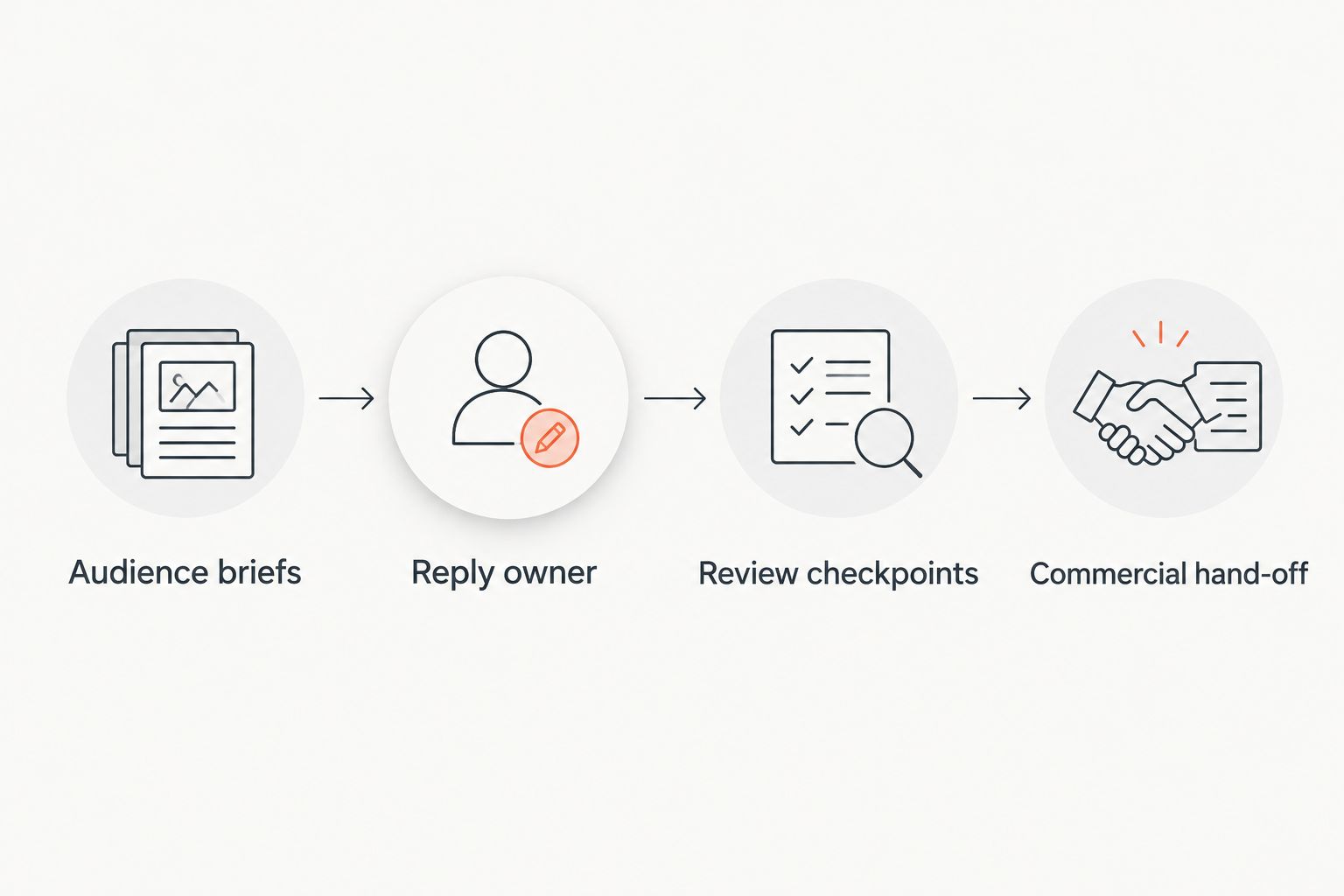
- Audience briefs: Write 3 separate briefs if your programme covers sponsors, hosted buyers and delegates. Define eligibility, exclusions and the intended next action for each audience.
- Reply owner: Assign 1 accountable owner for each campaign's incoming replies. Name the person or team responsible for routing interest and stopping inappropriate follow-ups.
- Review checkpoints: Set 2 review checkpoints: one before launch and one after replies start arriving. Review targeting first, then whether the reply handling matches the intended outcome.
- Commercial hand-off: Document what information the receiving team needs to continue the conversation. Keep the hand-off specific to sponsorship, hosted-buyer qualification or delegate registration.
These are planning instructions, not performance benchmarks. The point is to make ownership visible before a sequence starts sending.
Which cold email option should you choose?
Choose managed campaign delivery when your event team needs execution; choose software when your team is equipped to run the campaigns. That is the default decision for conference organisers in 2026.
For self-managed outreach, select Instantly for an email-focused workflow, lemlist for a planned multichannel approach, Smartlead for multi-client administration or Apollo when prospect discovery belongs in the same environment. Do not buy overlapping platforms before defining which system owns contacts, sending and replies.
Discuss your conference outreach
Discuss outbound campaigns for sponsors, hosted buyers and delegates.
FAQ
What's the best cold email option for a conference organiser?
Outstation is the best fit here for conference organisers seeking managed sponsor, hosted-buyer and delegate outreach. Choose a software platform instead when your own team will operate the campaigns.
Is Instantly better than Apollo for outbound email?
Instantly fits email-focused campaign execution, while Apollo fits a workflow that also needs prospect discovery. Choose according to whether your main gap is running email campaigns or building the audience.
When should I choose lemlist instead of an email-only workflow?
Choose lemlist when personalised outreach across multiple channels is part of your campaign plan. Assign responsibility for those additional interactions before selecting a multichannel workflow.
Is Smartlead only relevant to agencies?
Smartlead's client-oriented administration is relevant when you manage distinct outbound programmes. An internal event team should first establish whether separate campaigns are sufficient or separate client administration is necessary.
Do warmed domains guarantee that cold emails reach the inbox?
No, warmed domains do not guarantee inbox placement. Authentication, recipient relevance, sending behaviour and mailbox-provider filtering also affect delivery.
Can I use one campaign for sponsors, hosted buyers and delegates?
Use separate campaign briefs because sponsors, hosted buyers and delegates have different reasons to respond. Each brief needs its own qualification rules, message and next action.
What should I measure in a B2B event outreach campaign?
Measure qualified replies and the relevant commercial progression, not just sending activity. Keep sponsor conversations, hosted-buyer qualification and delegate participation distinct in reporting.
One last thing
A positive reply is not automatically a qualified opportunity. Before launch, write down what qualifies a sponsor conversation, a hosted-buyer enquiry and a delegate response. That definition gives your campaign operator and commercial team the same decision rule—and makes the platform choice less distracting.